
As a whole, I think our group worked very cohesively together. While I wouldn’t categorize our behavior as ‘groupthink’, we never experienced much friction or conflict between group members or group decisions; rather, we collaborated our different ideas and opinions to reach well-rounded conclusions. Being a small work group, less than twelve people, allowed us to communicate ideas effectively and listen to everyone’s input. Though I wasn’t present at the first class, and others weren’t present at the group meeting Kerry organized, no one was absent from the group as a whole, and everyone was more than great about filling themselves in on what was discussed in the group and what work needed to be done. I think that working in a group definitely gave a greater sense of commitment between everyone to the decisions we collectively reached, and this was well reflected in the cohesiveness and comprehensiveness of our final presentation.
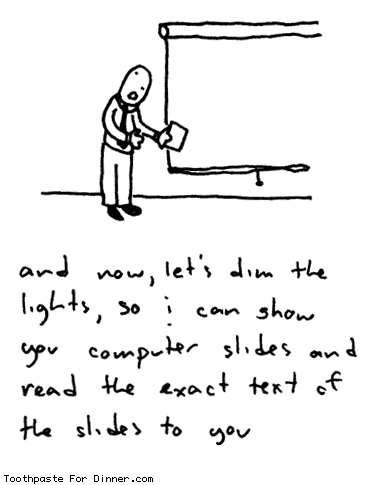 (clearly the complete opposite of our actual presentation!)
Individually, I effectively initiated and encouraged creative, diverse ideas, and came up with ways we could effectively make our presentation memorable and unique. I also think I effectively communicated with others to make sure all our members were ‘on the same page,’ so to speak, while remaining open-minded to others’ opinions.

Because our group was only formed for a relatively short period of time, the six different phases of group operations, as defined in book, may not have been as clear. After forming in class, group norming occurred both in class and outside of class, when we met in person at McKeldin. Not much storming occurred, though some degree of awkward primary group tension was inevitable. We successfully worked together in the conforming stage, with every member assigned a a subtopic of pitching.
In the performing stage, we all put in a fair share of work; specifically, after I created a communal GoogleDocs presentation we split up the slides and all collaborated on the presentation: Rachel wrote the initial group topic blog post, the introduction to pitching in general, and also transferred everyone's slides to Prezzi at the end; I completed the preparation for and introduction of pitching, as well as the presentation conclusion; Kerry communicated with everyone and organized group meetings and individual assignments, as well as being responsible for pitch delivery; Mark wrote and presented on pitch context and material; Taylor was responsible for the Elevator Pitch and improvisation; Major spoke about leadership's importance and the different types of it.
Finally, our group adjourned shortly after the in-class presentation, and aside from some confusion over the group reflection post, after our presentation and work finished, so did our group.
 Even ‘risky-shift phenomena’ was experienced: if we had been working by ourselves, no one would have had the guts to use Billy Mays’ pitching style to inject some humor into the presentation, nor would it have been as easy to interact with the class audience.
 Working in a group can be tricky, especially when there is broad room for disagreement over subject matter and group goals, but in general I believe our group was extremely successful at working together to create a fantastic end product.

This post made me laugh. And then think about my life. And then go to the basketball game. And then laugh.
ReplyDeleteGreat images and a great, concise reflection. Congratulations on a very well structured presentation. i enjoyed the "pitch" angle and took a lot away from your work!
ReplyDelete